12/7/07

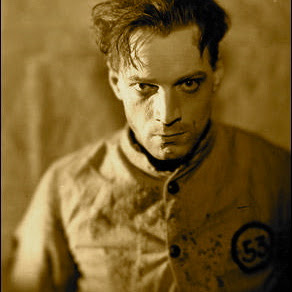
snow day seven


This was one of my favorite film discoveries this year. the entire movie was filmed in snow, so click on the title to see more white stuff in the stills on my original post.

11/15/07

rendering effeminate

 photo patandmikecastrationPS_zps9869b9ba.jpg
there's a curious contrast that i've noticed with the katharine hepburn films i've been watching lately. i've just finished a study of wwII/ films noirs and couldn't help but notice that the strong female roles in the hepburn films dove-tailed nicely with the femmes fatales in the noirs. take pat and mike, filmed in 1952, the era of film noir.

 photo patandmikecastrationpolicePS_zps0a03d0e4.jpg


look at the expression on spencer tracey's face as hepburn goodheartedly emasculates him in front of a crowd. not only does she single-handedly fend off his attackers but he has to reenact the embarassment for a second audience in the police station. the male fear of femmes fatales in so many films noirs is finally, horribly realized.

the female threat is handled differently than in films noirs. although this worst possible senario occurs, the fall-out is minimal. no one is punished for this role reversal and the man and woman live happily ever after. instead of the double-cross or death by gun fire, its marriage. through it all, he accepts her. it seems the threat is far more debilitating than the reality.

11/14/07

swarm


 photo patandmike1PS_zps4dd71e44.jpg

 photo patandmike3PS_zps02c5f785.jpg


 photo patandmike2PS_zpsa1f6976f.jpg


 photo patandmike4PS_zps93bbeba5.jpg


 photo patandmike5PS_zpsf0334f01.jpg
pat and mike 1952
directed by george cukor
cinematography by william daniels

it seems so much like a zombie movie, the way these golf fans trot after the big league players during the game. even more creepy is how, as the game nears the finish in a tie, the crowd becomes more agitated, intense and even start running close behind the caddies. the final swarm as the winner is declared is downright frightening. all this in a film about a ladies' golf match. it reminds me of the climax of day of the locust and certainly not what i'd expect from director george cukor.

7/29/07

i saw the reckless moment on the big screen

 photo dc451686-406c-47a3-8d0f-beaad999ae33_zpse4fe5b75.jpg

the reckless moment 1949
directed by max ophuls
cinematography by burnett guffey
sound engineer russell malmgren

what really captured me about this film was the sound. the scene featuring the corpse in the photo above is without dialog and without music- just the sound of the wind, and the waves lapping the shore, and eventually the motorboat.

i'm finding more and more how effective subdued sound (or its absense completely) is in creating mood in films and in music.

7/17/07

how i saw over 42.5 films in 26 hours


the 2007 san francisco silent film festival lasted from july 13 until july 15 and yes, i did watch more than 42 films including feature lengths, shorts and fragments.

there is a wide variety in the programming, which allows for the screening of all kinds of silent film. my favorite treasures to see are fragments from otherwise lost films, such as the pieces from two clara bow films, red hair and three weekends (both 1928).

the program of early french shorts was quite shocking. early filmmakers weren't concerned about offending their public in the least- i counted two beheadings (one most disturbingly realistic), a couple of impalements and one short, reputedly of the follies-bergeres, with much female nudity. the presenter was just as theatrical. he burned a piece of safety stock film and then a piece of nitrate live on-stage. watching the nitrate burn made me think of the devasting fire of henri langlois' cinemateque.

a pleasant surprise was the valley of the giants (1927). a plot involving logging in the wilds of california seemed a guaranteed yawn, even if it was seemingly inspired by the big four. director charles j brabin and cinematographer ted mccord created a stunning film with gorgeous vistas complimented by a runaway train which crashed off the side of a cliff! yeah!

also:
the student prince in old heidelberg 1927
directed by ernst lubitsch
stunning, i love his silent work

camille 1921
directed by and starring alla nazimova
incredibly melodramatic yet it still made me cry

miss lulu bett 1921
directed by william c demille
fantastic acting and an ending that had the crowd cheering

p.s.
the half movie was the godless girl (1929). a demille 2-hour-plus epic about religion at the end of a very full weekend sealed its own fate.

p.p.s
leonard maltin- i was standing on the platform waiting for the trolley. next to me a noisy group was scrambling around for quarters. guess who! there are lots of famous people in sf but i never expect to see them on public transit.

7/16/07

i saw a cottage on dartmoor on the big screen

i have to share the most incredible cinematic experience i've ever had in a movie theatre.


a cottage on dartmoor 1929
directed by anthony asquith
cinematography by stanley rodwell

it starts with a dramatic scene in which an escaped convict enters a lonely farmhouse. the woman, home alone, discovers him and screams- his name.

after that, the suspense hangs over the flashback that takes up most of the film. in no time, i noticed that my arm muscles hurt from clenching my fists, i was holding my breath, my pulse was racing and that sitting anywhere other than the utmost edge of my seat was way, way too far from the screen. and you know, everyone in the theatre row beside me was sitting the same way. i think at times the entire audience was holding its breath. no one was talking or fidgiting through this showing.

it was at times [often overlapping] hitchcockian in suspense, dziga-vertov-like in the editing, german-expressionist in the lighting and composition and film-noirish in the script. somehow, every element in film that creates the irresistible magic which steals my heart is combined in a cottage on dartmoor. it was a sublime hour and a half.

the musical score written and performed by stephen horne was a large portion of why the showing was so impressive. you may know from my earlier posts that i'm very discerning about musical accompaniment to silent films. now, mr horne has raised my standards much higher. it was a true soundtrack that deftly followed the on-screen action, subtly nuanced to increase the suspense and at times even completely silent. it was almost seamless- the only time my attention was drawn to the piano was to realize how it was heightening the tension, cranking it up to a delicious, almost unbearable level.

if i was independantly wealthy, i'd be following this film which is showing in film festivals around the world. somebody better put out a copy of this on dvd, and with the stephen horne score. i can't wait to get my hands on that!

read more here
and here

6/20/07

"thither we came, and thence down in the moat...."


 photo 7aa9291c-df8d-4aa3-9a81-b7e3f31bb771_zpsabacaef0.jpg

Kanal 1957
directed by andrzej wajda
cinematography by jerzy lipman

this was an interesting study in what film quality brings to my viewing experience. i've been watching a bunch of beautiful criterion releases lately. their high picture quality has spoiled me, to the extent of seeing Swing Time on the big screen and feeling disappointed about the scratches and jumps where the frames had deteriorated completely.

i'd already started watching the facets release of Kanal, loving how dark it was (visually and in the plot) when i found out there was a criterion version. i felt i had to abandon the first disc and finish watching the cleaner version; better to see the work of cinematographer jerzy lipman (who also filmed Knife in the Water.)

surprisingly, i much preferred the darker film i had cast aside. and its because while the criterion showed so clearly the horrors of travelling through the sewers, the facets showed what the characters had become- more ghosts then people, appearing and disappearing in unending darkness. it was a much more moving experience.

 photo 9fa626cc-2ac8-4355-ba94-5a1ffdb12b11_zpse7ff9c02.jpg


 photo 20204802-2c8b-4d17-9a74-3185665b621d_zpsceb2335f.jpg


 photo b46c1d5e-30ff-4900-bdd1-76c013fba5f3_zps08321716.jpg


 photo e3da92d3-d4fe-4601-8cb5-e20f3fbce25f_zpscc4b97f8.jpg


beautiful light flares.
the quote is credited to dante, spoken by the artist in response to the horrors of the sewers.

5/10/07

treasure in the snow


 photo sirarne9PS_zps0a8d93d9.jpg

sir arne's treasure 1919
directed by mauritz stiller
camera by julius jaenzon

 photo sirarne8PS_zpsb50956d1.jpg

i sought out this film because of the set design, but watching the location shooting took my breath away. julius jaenzon, the cinematographer, was largely responsible for moving outside of the studio to capture the natural beauty of the land. he eventually went into teaching- one student was ingmar bergman's cinematographer, sven nykvist.


 photo sirarne10PS_zpsbeb9a196.jpg


as in the chess player, the camera movement is remarkable. i have no idea how such smooth movement of the camera over the rough terrain is even possible. the naturalistic acting, the close matching of film speed plus this camera movement make this film feel contemporary.

4/6/07

adventures in early film design- repetition


 photo nous12PS_zpsdc03bba8.jpg

a nous la liberte 1931
directed by rene clair
art direction by lazare meerson

I know this film is already well known, maybe even because of the Charlie Chaplin controversy (thought personally, I think the antics in this film are derivitive of Buster Keaton- i guess all's fair in film criticism.) What impresses me is the architecture that relentlessly reinforces Rene Clair's themes.

A major theme is repetition, evidenced by the arrangement of the actors as well as the costumes, decor and lighting. There's often an asymmetrical placement of these visual cues, so it feels as though everything continues into infinity. The situation seems hopeless and impossible to change.


a nous la liberte 14 photo nous2PS_zps3616d49e.jpg


Its a visual restriction of movements, pointing out the direction for characters to move.


a nous la liberte 5 photo nous1PS_zps82fd0d34.jpg


a nous la liberte 3 photo nous3PS_zps2f973dd8.jpg


Another theme is conformity; the straight lines and occasional curves provide the templates.


a nous la liberte 2 photo nous5PS_zpsf60fadf9.jpg


Also: why is Rene Clair so mean to his female characters? Still, this film is far more toned down than Under The Roofs of Paris where the poor female protagonist is under attack throughout the film, either directly or indirectly.
Sheesh.

4/2/07

the beauty of the cotter pin


Mechanical Principals 3 photo mech3PS_zps8fe27b90.jpg

Mechanical Principles (1930)
directed by Ralph Steiner

This film is just a series of static shots of moving gears and pistons but also so much more. No still photo can do justice to the gentle wave of motion in each connection and subsequent parting.


Mechanical Principals 2 photo mech7PS_zps44c3bf22.jpg


There's something almost sensual in the willing manipulation of attractive parts by the attractive parts of another. Each movement is nothing less than graceful.


 photo mech1PS_zps0f6bd841.jpg

This is precisionism in motion.


Mechanical Principals 1 photo mech8PS_zpsc695c6dc.jpg

3/16/07

film canon additions march 2007


1920
manhatta d. charles sheeler and paul strand
excellent framing of various shots around manhattan (manhatta being the original indian name for the island). the reflections off the water around the tugboats at night are hypnotic.


1929
woman in the moon (frau im mond) d. fritz lang
very long, but so beautiful. i don't think i could edit it down anymore myself if i had created this masterpiece. the first half takes place on earth and features the most modern of the moderne interior design. the lead has mastered the brooding stare. special effects and some directing was done by oskar fischinger.


allegretto- oskar fischinger


1943
lifeboat d. alfred hitchcock
i'm a little embarassed to have so many hitchcock movies in my canon, but each is included for a different reason. lifeboat is stylistically unique- its shows his german expressionism roots more than any other film i've see of his. limiting himself to a single set gave him the freedom to experiment with mis en scene, camera techniques, and editing. one character's soliloquy is punctuated by rapid cutting amongst different angles, close-ups, medium, long shots- all seemlessly connected to the speech patterns. just brilliant.