5/30/12

Mandarin Mystery Art Deco

Mandarin Mystery 4

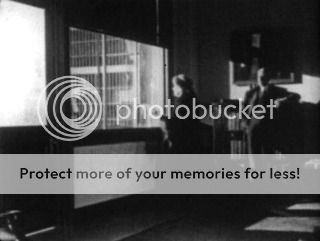
Here's another little Republic program-filler loaded with Art Deco goodness:

Mandarin Mystery 2  

Mandarin Mystery 1

Mandarin Mystery 3

I always cringe while watching films with titles like this, bracing myself for sudden appearances of racist depictions but the only Oriental appearance is on a stamp. Whew!

Mandarin Mystery 5

A very lovely demonstration of decorous lounging on an Art Deco chair (bias-cut silk evening gown required):

Mandarin Mystery 6

Oh golly, I want those sconces!

Out of respect for Franklin Pangborn, who faints repeatedly throughout the picture, I didn't include the great one but you can
watch it here for yourself.

The Mandarin Mystery (1936)
directed by Ralph Staub
cinematography by Jack Marta


5/22/12

Skew to the left, skew to the right

The program for the
2012 San Francisco Silent Film Festival has been announced. Book your vacation now, I have....

The Goose Woman5

The Goose Woman2

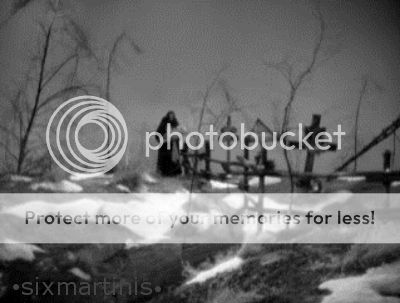
These are some of the stunning images seen last year at the San Francisco Silent Film Festival. Sadly, the film was nowhere near as clear as the print I saw on the big screen.

The Goose Woman1

Look at that composition! They had visuals down by 1925, alright.

The Goose Woman3

The Goose Woman4

This is one film I didn't know I would enjoy as much as I did. I stuck around to see Jack Pickford and ended up falling for Louise Dresser's beautifully nuanced facial expressions. You never know what you are going to discover at the festival.

What are you excited to see?

The Goose Woman (1925)
directed by Clarence Brown
cinematography by Milton Moore
art direction by William R. Schmitt
and E.E. Sheeley

5/20/12

original cinema

 photo 4aa2ebf1-db7a-47b8-bf35-961b38ddf7b3_zpsb480cce4.jpg

Light, shadow, and moving image - a solar eclipse is the essence of cinema.

Here in the Bay Area it was an annular eclipse, leaving just a crescent-shaped sliver of sun visible, so that shape became the theme of this primitive cinema. Look at the countless crescents formed by the shadow of a tree. This is the original non-narrative moving image.

5/10/12

Light at the end

 photo b532d2b1-c4e2-469c-88a5-21cdea09ff3b_zps9560d38f.jpg

It looks black up ahead, but the end of the semester is nearly here....

Seance On A Wet Afternoon (1964)
directed by Bryan Forbes
cinematography by Gerry Turpin

4/13/12

under water

blue murder st trinians

I've been swimming in schoolwork, but soon there'll be time for the real thing too. Not here but here.
I love my school!

I have a backlog of photos - I'll update when I can.

Blue Murder At St. Trinian's (1957)
directed by Frank Launder
cinematography by Gerald Gibbs
art direction by Allan Harris

3/29/12

i saw Napoleon on 3 big screens

napoleon 1
image courtesy Photoplay Productions 

...and it was absolutely amazing.

I was wishing I had brushed up on French history since new characters were introduced throughout the whole 5.5 hours, but it really didn't matter what was going on in the plot. It was completely entertaining, and I was pulled into the film the entire time. Abel Gance populated the film with faces full of character, which certainly helped to keep me involved. Despite the amount of time I spent watching a film, I didn't feel exhausted as I usually do at film festivals. Maybe I've developed an endurance from seeing so many films in school, but my friends said they didn't feel tired either.

Apparently even the length of film wasn't enough for Gance since he includes many shots of multiple-exposures and occasionally split the screen into different fragments. And then there was the Polyvision.

I was well prepared for the 3-screen finale but its appearance was still awe-inspiring. Gasps and spontaneous applause exploded from the audience as the curtains swing back to reveal the Polyvision screens. What struck me at first was the light - three screens means much more light in the room. All of the heads in front of me were lit up, putting the audience into the film. The sudden light felt like the first warm spring day after winter. It was really, really cool.

The three projectors were aligned really well, much better than what is shown in the trailer. There is a loose horizon match across the screens which varies through this part of the film. Sometimes each screen shows different views or events but the most impressive technique was moving characters across the boundaries. The horse that runs off-screen then charges across all three in close-up also drew gasps from the audience. It was a perfect cinematic moment, but then again I had misty eyes all throughout the finale.


If you are still on the fence about seeing it, GO!
If you do:
There are two 20 minute intermissions. Bring snacks or buy some there.
The bathroom lines are really, really long. Plan accordingly.
There is also a 1.5 hour dinner break, and they have everyone leave the building. Make reservations at a local restaurant to make sure you get food and get back in time. The first scene after the break is fantastic.

If you go, let me know what you think!

napoleon 2
image courtesy Photoplay Productions

2/5/12

sfumato or chiaroscuro?

 photo b74b69a6-017e-4457-a7aa-ecbb1ecc11ed_zps18f902ed.jpg

Continuing the noir-ish smoky-room effect, this time in the Prisoner of Zenda. I'm having fun with these.

But what do you think - is this an example of sfumato or chiaroscuro? Is an image rendered in black and white only defined as chiaroscuro? The definition of sfumato seems to fit here too. Can this embody both definitions? How would you categorize this style?

Prisoner of Zenda (1937)
directed by John Cromwell
cinematography by James Wong Howe
and Bert Glennon
art direction by Lyle Wheeler

1/22/12

high contrast

 photo 45a892d4-5069-4c7d-ae52-09bc4f526ec8_zps2aebfd99.jpg

I love this noir-ish moment- from 1937 yet. It could almost be a template for what was to come. Barbara Stanwyck acts the pants off everyone else and all Joel McCrae ever needs to do is stand in front of the camera, as far as I'm concerned.

Interns Can't Take Money (1937)
directed by Alfred Santell
cinematography by Theodor Sparkuhl - huh, I gotta see more...
art direction by Hans Drier
and Roland Anderson

1/14/12

smoking section

 photo 92d9bc42-6ebb-43fd-925d-a8136b57608e_zps7d3c64bb.jpg

The Story of a Cheat (1936)
directed by Sasha Guitry
cinematography by Marcel Lucien

1/12/12

onto a new year

 photo d110f2be-1b7c-4c5b-9f13-e4caf8033bf5_zps541a03cc.jpg

This is the Hearst Memorial Mining building at UC Berkeley. The school once had a working mine on campus for educational purposes. Now it's a traffic loop, but this refurbished building maintains the grandeur of an earlier education experience. It's one part of the inspiring atmosphere on campus - along with the Pacific Film Archive of course.

This is my version of a year-end wrap-up. Most of my time was taken up with classes and schoolwork, but I did attend some amazing film screenings which you can go read. Brian at Hell On Frisco Bay, fine film writer that he is, invites fellow locals to share their favorite rep theater screenings from 2011. Go check it out; I'll wait for you here.

I've been enjoying reading other people's end-of-year lists all over the internet film world, but I'm sad to notice the neglect of the passing of some important avant garde and experimental filmmakers:

George Kuchar, 1942-2011, whose I, An Actress was selected for preservation at the National Film Registry for 2011;

Robert Breer, 1926-2011, creator of the roto-scoped and beautiful Fuji which was added back in 2002;

Jordan Belson, 1926-2011, whose Allures was also selected for preservation this year.

Thanks, guys.

 photo f890ad29-7982-451c-a724-4d167454efba_zps5d33dd7a.jpg

12/30/11

most snowiest time of the year day 30

Aural Adjunct: Snow Time by Felix Arndt

 photo 1ea0317e-77f6-4544-933e-928fe196d77c_zps367c8de4.jpg

King's Row (1942)
directed by Sam Wood
cinematography by James Wong Howe
production design by William Cameron Menzies
art direction by Carl Jules Weyl

12/29/11

most snowiest time of the year day 29

 photo 4c454a45-f9e4-40fd-844e-31430add4e7d_zps42156f6b.jpg

We Live Again (1934)
directed by Rouben Mamoulian
cinematography by Gregg Toland